





























Approve the Towel Logo with the Towel Folded
Include an open-towel placement view and the intended folded presentation when ordering towels with an embroidered mark.
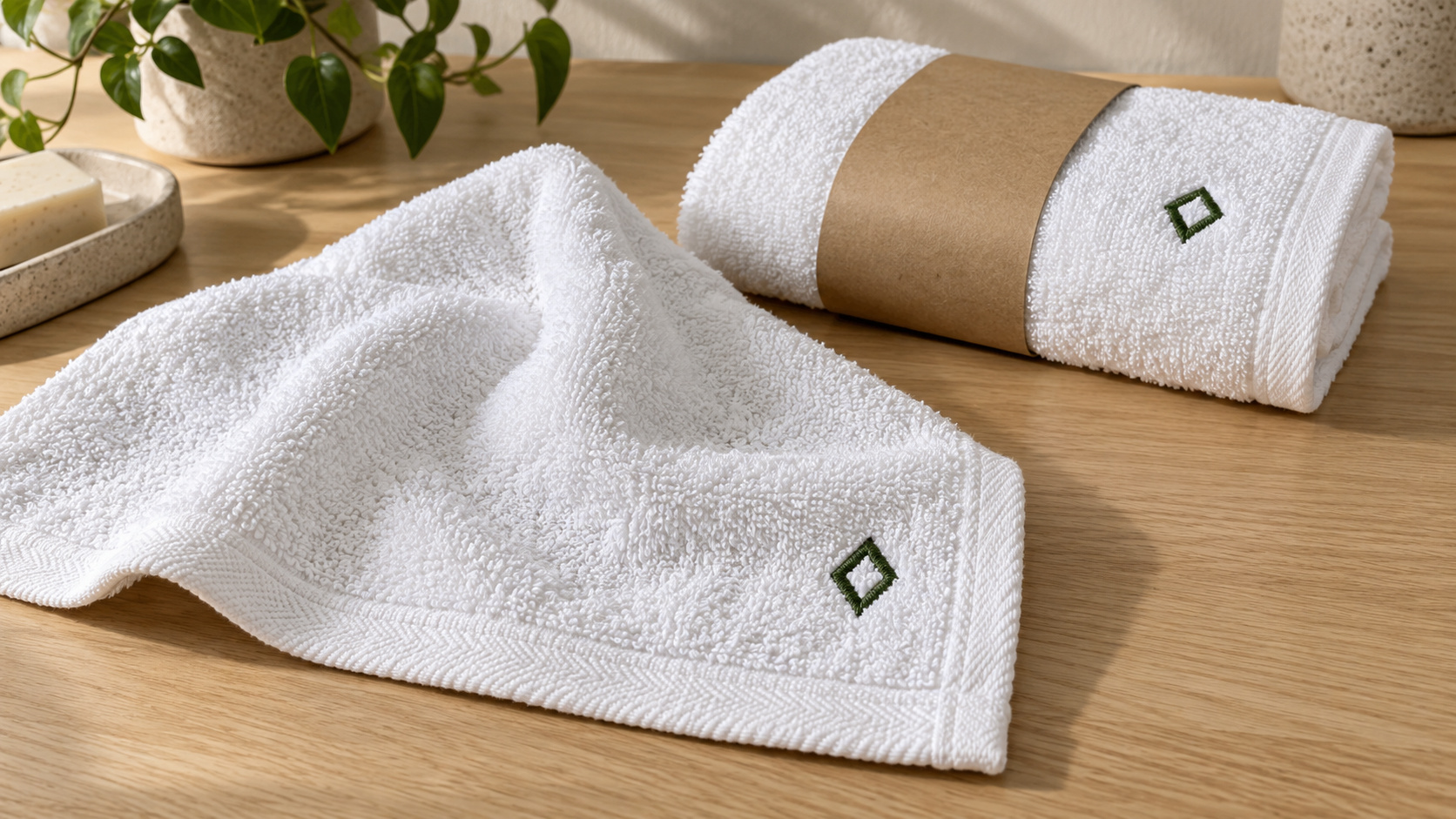
A logo can look well placed on an open towel and disappear when the towel is folded for sale. I would settle that question while ordering the sample. The supplier would receive the artwork and a picture of the intended fold, with the face that should be visible marked. There would still be decisions about the towel itself, but the presentation would no longer be left for someone packing the finished order to interpret.
On the placement sheet, I would draw the towel open and identify the finished edges. The logo would have an agreed width and a position measured from named reference edges. If the design had lettering, its reading direction would be shown as well. A note saying bottom right would leave me asking whose view of the towel was intended. I would rather have a marked face and a sketch that the supplier could return with any questions before making the sample.
I would then fold the proposed sample as it would be presented to the buyer. If a paper band or box window was planned, it would belong in this check. Part of a mark could be hidden by the band even though the placement was correct on the unfolded towel. Moving the band, changing the fold and moving the embroidery would be different proposed changes. I would ask for the selected arrangement to be shown again, so the artwork approval did not accidentally become approval of several unexamined packaging options.
The sample would need to use the quoted towel fabric. A flat artwork preview would not tell me how small stitched details appeared among the loops of a terry surface. Madeira's embroidery-material guidance discusses toppings used to keep stitches from sinking into that surface. I would leave the embroidery setup to the supplier and ask to see the resulting sample, rather than prescribe a particular material from a web page. The detail I wanted approved would be the actual embroidered mark on the offered towel, viewed from the front and the reverse.
There could be a small towel and a bath towel in the same enquiry. I would not carry the first placement drawing across to the second without unfolding both samples. The finished edges used as references could be clear in one drawing and missing from the other. With the two samples open on a table, I would check which edge each placement measurement started from. Then I would put each into its intended fold. If the larger towel needed a different mark position, I would have that shown on a drawing for the larger towel rather than leave a handwritten exception on the smaller towel's approval sheet.
For the order file, I would photograph the open and folded sample side by side, keeping the artwork reference in the same record. The purchase order would name the accepted sample and the packing arrangement. A later request for a different box would bring me back to the folded sample: would the window still show the mark? I would want an image of the towel inside the proposed box before agreeing to the change. The same check would apply if someone wanted to move the paper band. It would be easier to return to those views than to explain a hidden logo after the cartons had been packed.
Share the product, specifications, quantity and destination to discuss sourcing options.