



































Lay Out Every Section Before Accepting a Travel Rod Set
Define the sections, tip options and protective contents of a travel rod set before checking sampled packs against the order.
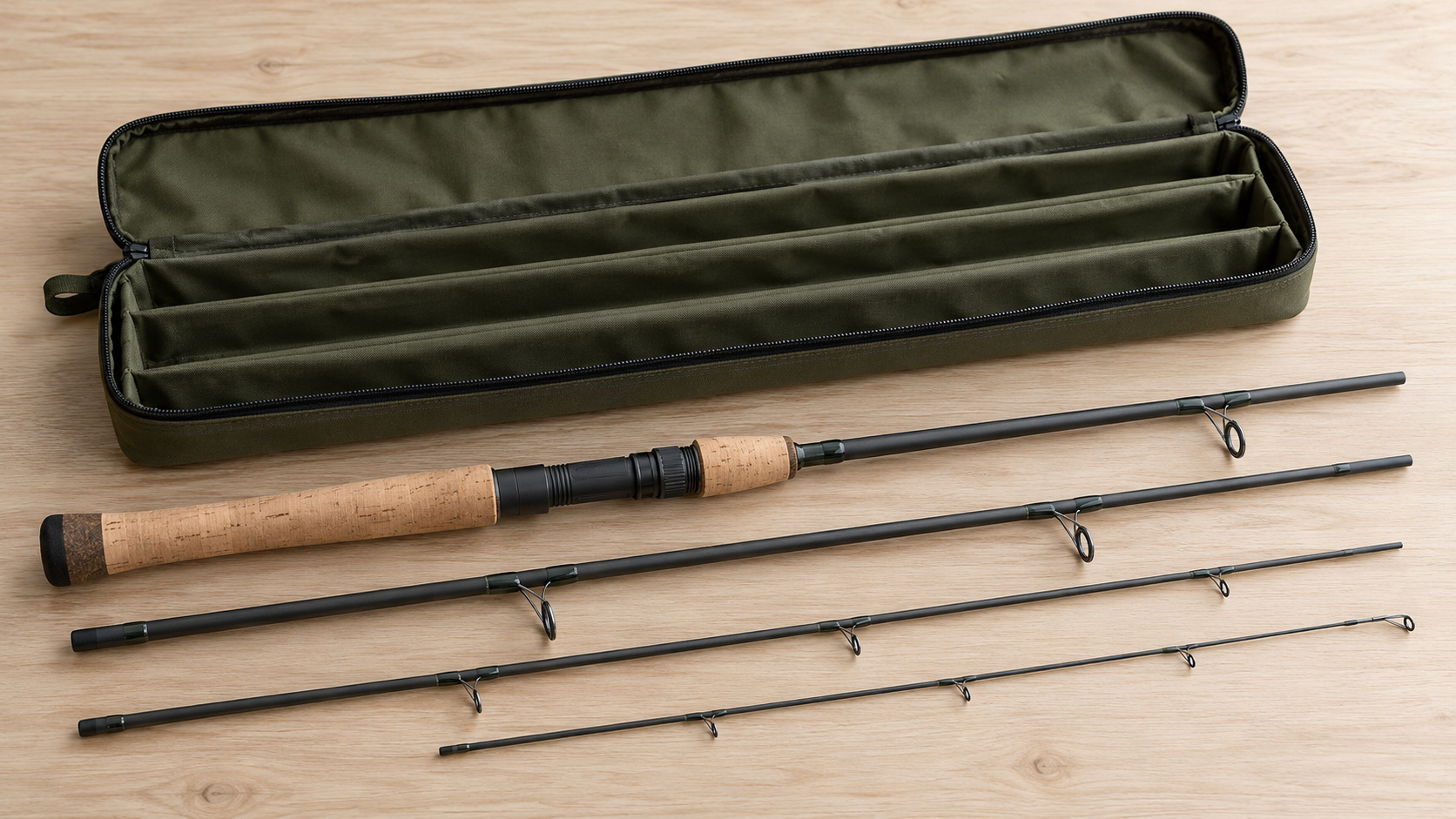
When buying a travel fishing rod, I would ask for an open-pack photograph with every supplied section laid out. A picture of the closed case would leave me wondering what counted as one set. The order might call for one complete rod, while an offer could include an extension or an alternative tip. I would want those contents named before agreeing how the sampled packs would be checked.
The list would begin with the model reference, then identify the sections belonging to that model. Where the supplier used section numbers, I would ask for them on the reference photograph as well. A spare tip would get a separate entry from the tip needed to complete the rod. If two tips were alternatives, the pack list would say so. I would not add them together and describe the resulting count as the number of sections in a single assembled rod.
For a multi-length design, I would ask which supplied section belonged to each configuration. Shimano's STC AX Spinning Multi Length information is an example of a manufacturer describing an extension as part of a particular rod design. I would use that as a reason to ask the question, not assume that another supplier's travel rod worked the same way. The offered model would need its own section diagram and instructions. A short transport length on a quotation would not identify which pieces the buyer should receive.
During the agreed sample inspection, I would open each selected pack and compare its contents with that diagram. The handle section, intermediate pieces and tip would stay with their own pack while being photographed. For a piece that did not match the reference, I would put its own marking in the inspection notes and keep it beside the rest of that pack. I would want to see the contents of the next pack separately, even if it appeared to contain the missing piece. The supplier could then reply to the two pack records instead of a combined photograph with the correct total number of pieces.
I would include close photographs of the guides and the ends of the sections in the sample record. For a visible difference, the photograph would need to show where it was on the rod as well as the detail itself. A close crop of a guide alone could leave the supplier asking which section it came from. I would leave the parts as found for that discussion: no straightening the guide or forcing a joint to close. If an assembly check had been agreed, it would be carried out under the model's instructions. The report would distinguish it from the contents check. I would not describe this inspection as a casting or load test; those would require separately defined assessments.
Afterwards, I would ask for a view of the sections back inside their protective case before it was closed. The tip should be identifiable in that view, along with the other supplied pieces and any agreed sleeve or end protection. If a different case were proposed, I would request this view for the replacement case too. For filing, I would keep the pack label photograph with its open-case view and the laid-out section photograph. A question about an absent tip could then be taken back to one sampled pack, without having to decide which of several rods on a table it belonged to.
Share the product, specifications, quantity and destination to discuss sourcing options.