


































Put the Running Shoe Size Mix Beside Each Colour
Build a size-by-colour order sheet for the actual running shoe model, with size-system references and carton contents confirmed before ordering.
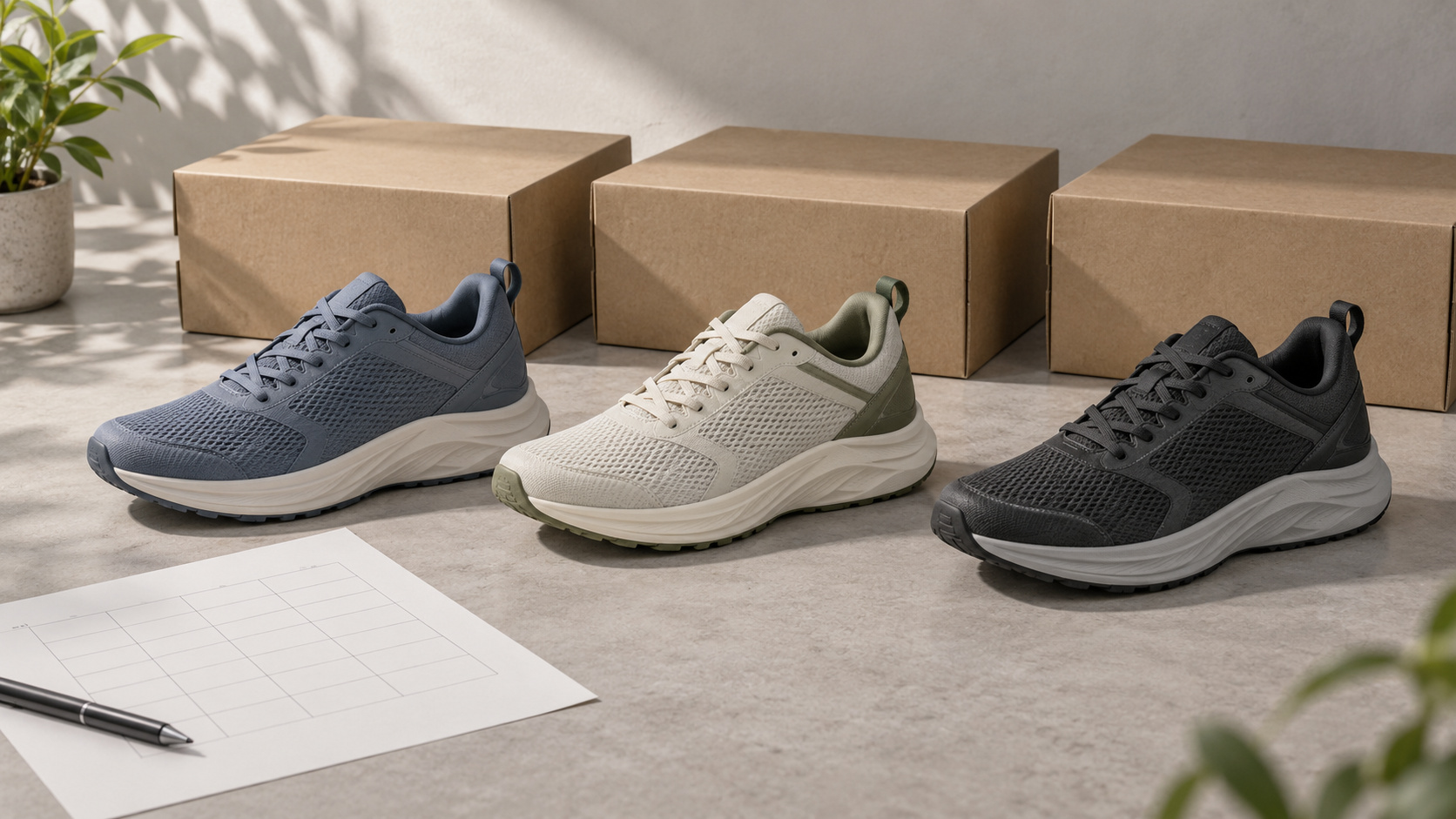
A running shoe range can look complete in a row of colour samples while leaving the buyer without an orderable size mix. Before choosing the colours, I would ask the supplier to show the available sizes for each one. I would put them in a grid: one colour per row, one quoted size per column. A blank cell would need an explanation. It could mean unavailable, not yet sampled or simply not included in the quotation.
The column headings would name the sizing system. A number without US, UK, EU or another stated reference would stay unresolved. ASICS' own size guide separates size references, including men's and women's US sizes; it is an example of why the heading matters. I would not copy that brand's conversions into the order for a different manufacturer's shoe. The offered model would need its own supplier-confirmed chart, and the chart reference would remain beside the order grid.
I would ask for sample pairs identified by the same model, colour and size references. A photograph could show the shoe label and the box label together, with the pair itself visible. For any fitting review, the sample would need to be the actual model under consideration. I would keep the comments with that sample's size reference rather than turn one person's reaction into a rule that everyone should choose a larger or smaller size. If a different width were offered, it would get a separate entry instead of being hidden under the same size heading.
Before entering pair counts, I would ask the retailer what it knew about the sizes it had sold and the pairs it had taken back. If it had records for a comparable shoe, I would keep that model's name with the figures. If it had no such records, I would leave the proposed mix identified as an initial buying decision, with the buyer choosing the quantities. I would not present a made-up size curve as market data. Each colour row would show its own pair counts; a new colour could have a smaller order without changing the size references at the top of the sheet.
Next I would ask the supplier to fill in one proposed shipping carton. Which sizes were in it, and how many pairs of each? If the carton contained only one colour, I could set that breakdown beside the colour's row on the sheet. Where the supplier required whole cartons, I would calculate the order from that actual breakdown and show the resulting quantities to the buyer. A carton containing several colours would need another breakdown, with a colour reference against every size quantity. The total on the carton would still be useful, but I would want to see the pairs behind it before agreeing to the assortment.
I would attach the accepted sheet and the model's size chart to the order, along with the selected carton breakdown. For a colour that became unavailable, I would ask the supplier to fill in a replacement row before I agreed to a substitute. I could then see which sizes were offered in the replacement colour and what would arrive inside its cartons. The old row would remain in the order history, marked as replaced. On delivery, I would record the received pairs in a separate column against each ordered colour and size, leaving any shortage visible for the supplier to answer.
Share the product, specifications, quantity and destination to discuss sourcing options.